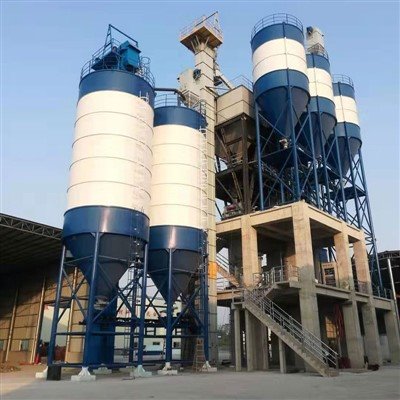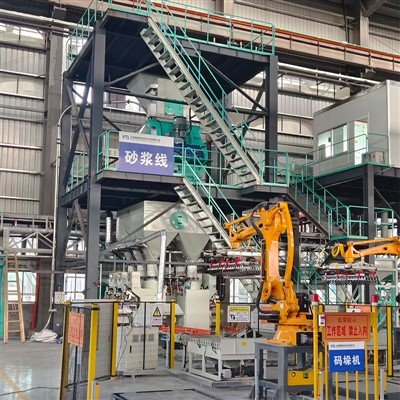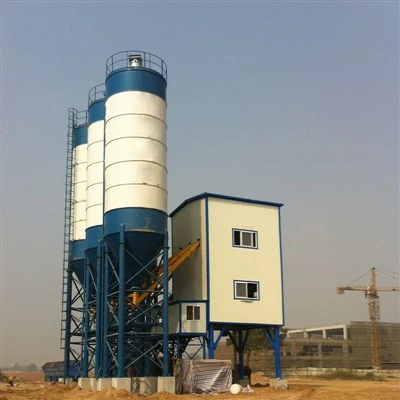

Broad Applicability: Suitable for mainstream production scales of 50,000 to 100,000 tons per year. It meets the production needs for standard masonry and plastering mortars and-with the addition of a high-speed cutter (fly-knife) unit-can also produce specialty mortars like standard tile adhesive, making it ideal for the business scope of most small-to-medium-sized regional building material enterprises.
High Return on Investment: Investment costs range from only 1 to 1.5 million RMB-far lower than the multi-million RMB investment required for fully automated tower-style production lines. It features a short construction period, requires a small footprint (only 200–300 m²), and can be operated by just 3–5 workers, making the entry barrier compatible with the budgets and site conditions of most domestic dry-mixed mortar manufacturers.
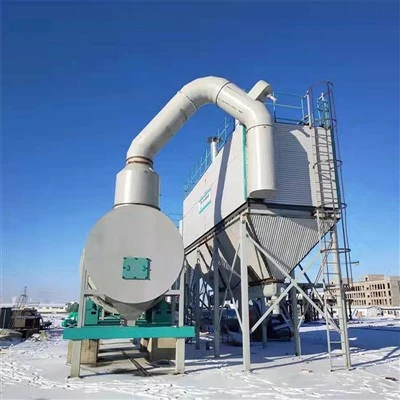
Stable Performance: Offers a mixing uniformity of ≥95% with a batch mixing time of just 3–8 minutes. Equipped with automatic batching scales, valve-bag packaging machines, and pulse dust removal systems, it balances production efficiency with environmental compliance, fully meeting standard domestic requirements for construction mortar production.
Other Common Types
Small-scale, Simple Dry-mixed Mortar Mixers: Widely used in township workshops and by building material retailers for in-house needs. Investment is low (100,000–300,000 RMB), the footprint is under 50 m², and operation is flexible, making them suitable for local, small-batch, and sporadic mortar demands.
Fully Automated Tower-style Dry-mixed Mortar Production Lines:Widely used by large-scale building material enterprises with annual outputs exceeding 200,000 tons. The entire process requires only 2–3 operators, the mixing cycle is reduced to 45–90 seconds, and the system supports the production of a full range of mortar types; this is the mainstream choice for industry-leading companies.